Reader Phyllis asks:

My brother gave me a mastercard debit card for 50.00. His wife paid the 4.95 activation fee upfront. However, when i went to use it at a restaurant, they said only 40.00 could be gotten through. I have tried numerous times to redeem the remaining 10.00 to no avail. What can be done about this fraud.

I’ve read a number of times that restaurant POS systems tend to add an additional 20% or more when running credit card authorizations to account for an additional charge in the form of a tip.  This may be something that is automatic and beyond the control of the person running the card.  In your case it seems that the system added an additional 25% for the authorization and would only allow $40 of charge as the additional $10 was included in the authorization.

With a normal credit card you might never know, because when the transaction settles a few days later and the original authorization expires or is removed, you only see the charge for the exact amount you actually paid (including the tip).

This is a problem that has plagued open-loop (which includes MasterCard, Visa, American Express, and Discover) gift cards from the very start.  In addition to restaurants, gas stations tend to authorize specific amounts (often $50 or $75) which causes problems with gift cards as it makes it impossible to put $10 of gas in your car using a card with $10 left on it.

While your missing $10 might be locked up for up to two weeks before the original authorization expires (and this is not a fault of the merchant, it is most likely the card issuer that wants make sure you don’t charge more than you should – but they go too far) you will eventually be able to spend that $10 if you can find a business that will let you charge that much as a separate transaction if your purchase something for more.  This is called a split tender when you use two different payment methods to pay one total charge (like a $10 gift card + cash).  Most if not all closed-loop (i.e. store-specific) gift cards will allow this, but surprisingly few merchants are familiar with how to do this (or willing to) with an open-loop gift cards, despite gift card issuers claims to the contrary.

In 2008 we started a service that allowed people to get the last few buck off their open-loop gift cards, but the powers that be were not happy with it and we had to shut it down.  There are no similar services that we are aware of, so you have to find a merchant that will allow you to do a split tender, or purchase something for exactly $10 to get the full amount off.

We’ve reported many times before on gift cards being stolen by Postal employees (like here, here, and here) and employees of other package carriers and even employees that deliver mail in large buildings.

What is surprising is that people still send gift card unprotected through the mail.

As a reminder for the holiday season, when a large percentage of gift cards are purchased and mailed each year, here are some tips on safe mailing.

  • Before you mail, write down the numbers of the cards to make sure you can report them stolen if they don’t arrive
  • Verify with the recipient that they arrived and still have the initial value on them.
  • Do not package gift cards in something obvious, like a greeting card.  Gift cards can be felt very easily and snatched from the mail.  A better idea is to put gift cards is a small box.
  • It isn’t just theft that can make your gift card disappear.  A small percentage of gift cards mailed in greeting cards or plain envelopes get mangled by the automatic sorting machinery; the gift cards can get separate from the letter.


Tech site GeekWire reports on an Amazon.com patent filing that, despite the obvious privacy implications, makes me sorry I didn’t think of it first.

… digging into the text, the approach includes the option for the giver to not only recommend items via the gift card but also to restrict the types of things the card can be used to buy — and to get a report back on what the recipient purchases.

Sounds like something every parent could appreciate.

Startup Giftly has opted to bypass the retailer on its gift cards by creating location-based virtual gift cards that become activated when the recipient is physically at the retailer the cards are intended for.  Once the recipient logs onto the Giftly website and verifies their location, they can have the gift card cash sent to a credit card, debit card, or paypal.  For the smart-phone-less recipients (like my mother-in-law) Giftly intends to offer the option of a Visa open-loop gift card.

It’s a neat idea certainly, but one has to wonder if receiving a virtual gift card that can’t actually be spent at the store is as gratifying as actually getting a piece of plastic that can be exchanged for real stuff.  It’s possible that a virtual gift card like this cross the line from thoughtful gift card (“Hey, you got me a Target gift card; I love shopping at Target”) to thoughtless gift card (“Wow, I actually have to spend my own money first to be able to buy something with this gift card.”).

Those considerations aside, Giftly offers several benefits over traditional gift cards, especially open-loop ones

  • You no longer have to worry about having a few bucks left on your gift card that you can’t spend – it all gets sent to your credit card or PayPal.
  • You can stack multiple gifts on the same card, making it much more likely you’ll be able to use them.
  • Their gift card never expire (as long as the company is in business presumably).
  • Your gift doesn’t have to be restricted to just one business but can include several or can just be used anywhere.
  • Once a recipient unlocks the amount by visiting the store, they can spend it anywhere.
  • You can make the gift card for ANY store, not just ones that actually have gift cards.

These alone might get me to buy a Giftly card for one of my friends or relatives that really appreciates gift cards instead of a traditional one.

Giftly, while they won’t spill all the beans on their yet to be released Visa gift card feature, claim they want to make it seamless to transfer money on and off those cards as well, which would go a long way to solving the last few bucks problem with open-loop gift cards and something we welcome.

Like it or not, when a company issues a gift card they have to realize that they could potentially be around for a long time, especially now that the federal gift card laws require they don’t expire for at least 5 years.

That is the lesson Apple learned when it advertised 99 cent songs on some of its gift cards or their packaging and later increased the prices on some songs.

If you happened to be one of the customers that bought or received a 99 cent gift card, a class action settlement has been reached valued at $3.25 per customer.

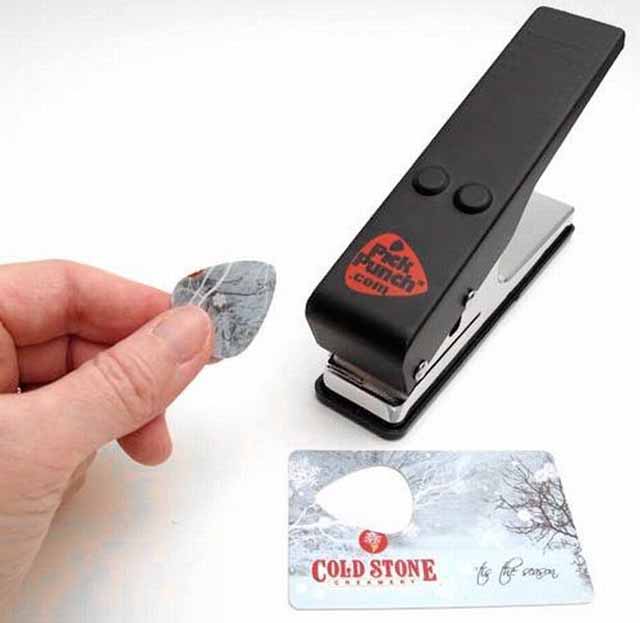
pickpunch.com

We welcome any publicity that helps people find the plethora of helpful information on gift cards our site provides for consumers, even if it is incorrect.

The Today Show mentioned us this morning as a gift card comparison shopping site, which we are not, but our resources page will help you find all the gift card secondary marketplaces and our blog has lots of useful information for the gift card consumer.

In addition to GiftCardGranny (a great site which the Today Show also mentioned) the other comparison shopping sites for gift cards we are aware of are CardNap and CardAvenue (which also has a helpful gift card registry).   Both CardNap and GiftCardGranny allow you to compare the resale price of your gift card among several of the secondary marketplaces (like CardPool, PlasticJungle, and ABC Gift Cards), and all three sites list prices for gift cards you can buy at a discount.

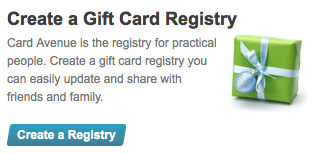
We recently took a fresh look at CardAvenue which changed its business model from a strict secondary marketplace to a gift card registry and secondary marketplace listing aggregator, which lists gift cards for sale at a discount from many of the secondary marketplaces.

As one of the reasons we started this site was to help consumers get the most value out of gift cards, it is worth considering the idea of a gift card registry in the grand scheme of all things gift card.

I think it is a great idea.  Events like weddings in particular are rarely an opportunity to give a personalized gift and gift cards are very common wedding gifts, but a registry would be helpful for other events, like birthdays, graduations, and baby showers; having a registry would help insure that recipients got gift cards they could actually use.  Getting gift cards you can (and intend to) use makes them more like cash and less like money that will eventually be lost.

CardAvenue bills itself as the first and only gift card registry, but strictly speaking this isn’t quite the case.  Gift card secondary marketplace Card Hub offers a similar service and alternately call it a registry and a wish list.  Some other gift card sellers also offer a registry, but only for their own cards, making them less useful.

What is to stop other sites from copying this great idea?  Technically, it isn’t a difficult feature, but as an aggregator of secondary marketplace listings rather than a direct secondary marketplace, CardAvenue has an advantage over a registry offered as an additional feature by a secondary marketplace; namely, they can offer a much wider selection of listings than the secondary marketplaces can directly.  There aren’t too many listing aggregators at the moment (CardNap and GiftCardGranny being the other two we are aware of).

Their service would be more helpful if you could purchase cards directly through CardAvenue (without having to go to PlasticJungle or another site), which would make it easier to have the gift cards sent to (correct) recipients address, much like when you purchase a gift from a registry at Macy’s, the shipping address is already filled in.  This would require a high level of cooperation from the secondary marketplaces, so I don’t expect it anytime soon.

We’ve reported on this a number of times before, and it is time to say it again:  Non-gift prepaid debit cards are not covered by the fee limitations imposed on gift cards by the Credit Card Act of 2009, and issuers are free to load up as many fees as they wish, and many do.

As the Wall Street Journal reports (Drawing Benefits Via a Debit Card?  There’s a Fee for That, 5/14/11) banks seem to be prepared to use prepaid debit card fees to make up for lost fee revenue from normal debit card interchange fees.

The combined regulatory changes for credit and debit cards are expected to cost financial firms about $26.2 billion a year in revenue, according to R.K. Hammer, a credit-card consulting firm in Thousand Oaks, Calif.

Richard Davis, U.S. Bancorp’s chairman, president and chief executive, said last month that prepaid debit cards and other products will help the company recover roughly half of the revenue likely to be lost from swipe-fee rules being written by regulators.

Keep in mind that fees on most of these cards are already high:

PNC Financial Services Group Inc. subtracts 50 cents from the unemployment benefits of Indiana residents every time they check their balance at one of the Pittsburgh bank’s automated teller machines. Recipients also get just one free cash withdrawal per week; other cash withdrawals cost $1.25.

Wow! It gets worse.  Prepaid debit cards are allowed to charge you for overdrawing your balance, which is reminiscent of the debit card overdraft gold rush which just got outlawed by federal laws.  Who in the world would expect a prepaid debit card to allow charges beyond the available balance.  Even more so than normal debit cards, consumers expect exactly the opposite, which makes these fees a real blind-side.

Given a choice between prepaid gift cards that have highly regulated (and reasonable) fees, and prepaid debit cards that are already saddled with a myriad of fees and more to come, the prepaid debit card industry would surely find a cold reception from consumers.

But states and the federal government seem to be charging full speed ahead on issuing benefits, tax refunds, and other government to consumer money transfers via prepaid debit cards and they don’t appear to have made much effort to negotiate reasonable fees.  Furthermore, some states officials were involved in lobbying for the prepaid debit card exemption from the new rules on swipe fees:

Last year, 10 state treasurers successfully prodded lawmakers to shield prepaid debit cards from part of the Dodd-Frank financial-overhaul law that limits so-called “swipe fees” charged to retailers.

The bottom line is that these cards are no bargain for consumers.  If you are unfortunate enough to get one, do your best to get all the money off of them immediately before the fees put a substantial dent in the balance.

That retailers are realizing they have nothing to lose and everything to gain by making gift cards easier for consumers to use is what I’m taking from this piece on Cardpool’s new service (now in limited release to existing Cardpool customers) that allows you to buy gift cards, and have them immediately delivered to your iOS or Android device.

Because closed-loop gift cards are part of, well, closed gift card networks, I would guess this could only be done in collaboration with the gift card issuing company, such that Cardpool is able to issue new gift cards.

This would have to be my favorite way to use your a gift card, buy it and then immediately use it up at the checkout counter of the store you are in.

Have you ever wondered what gift cards would be like in this country if we had no gift card laws or consumer watchdogs?  Look no further than China as this recent report illustrates.

Prepaid gift cards make up almost 10% of Chinas $1.56 trillion consumer economy, at around $153 billion dollars. For comparison, that is about 1 1/2 times the amount spent on gift cards in the US while the US consumer economy is 6.5 times larger.  In the US, about 1% of consumer spending is on gift cards.

Gift cards are largely unregulated, meaning, breakage (the amount of the card face value not spent before the cards expire) could well be many times larger than in the US, where breakage is believed to be around 10%.  As far as I can tell, there are no laws limiting card expiration.

There is no concept of unclaimed property laws in China, which means any gift card balance not spent goes directly to the issuing company.  In the US, states have become very aggressive at claiming gift card breakage as unclaimed property which means companies profit less and less from unspent balances.

Gift cards in China pay no interest, despite a very high level of inflation; companies get to put the gift card money to work as consumers aren’t using the cards while the card face value becomes lower and lower.  You can be sure that if we had 7-10% inflation in the US, laws would be passed requiring gift card to pay interest.

Gift cards take a bite out of Chinese consumers

  • Source: Global Times
  • [20:57 April 28 2011]

Observers often try to understand the mysterious patterns of Chinese consumption, such as the general sense of thrift when saving money, obsession with luxury goods and the sometimes irrational enthusiasm for health products.

The wide use of prepaid gift cards perhaps offer us some hints about Chinese patterns of consumption. Somehow the tiny little gift card has become a symbolic economic idiosyncrasy.

China isn’t an enthusiastically consumerist country. Its total GDP is twice that of the UK, but according to World Bank statistics, in 2010 its total household consumption ($1.56 trillion) was even lower than the UK’s ($1.72 trillion).

hinese spend modestly on most things – save gift cards.

According to consultants’ estimates, Chinese consumers spend nearly 1 trillion yuan ($153 billion) on prepaid gift cards each year, while the British only spend $5 billion. It is also estimated that in China’s malls, payments made through gift cards account for 15 percent of merchants’ total average revenue.

Gift cards’ intriguing popularity has explanations, many of which are cultural. Gift-giving is certainly a Chinese custom. Sometimes such gift is in the form of hongbao (red envelopes containing cash), which seem to be indelicate. But many are worried as to whether gift cards worth hundreds of yuan are a medium for expressing gratitude or a vehicle for small bribes.

Recently, the use of gift cards as bribes even drew attention from the highest ranks of the Chinese government.
On March 25, Premier Wen Jiabao, during a speech on fighting corruption, warned that the gift card had created an easy means of corruption and called on the government to address the issue.

But it’s unlikely that a market of 1 trillion yuan is all made up of bribes. There is also economic rationale behind this boom.

Some people believe that company’s giving out gift cards rather than direct payments to employees facilitates tax evasion.

This partly explains the enormous amounts spent on gift cards by large firms.

As to the supply side, at a time of inflation and mounting interest rates, a gift card that pays consumers no interest are actually giving retailers whopping extra income.

Retailers can sell gift cards to consumers and then lend the deposited money out, while the consumers are shouldering the burden of inflation.

This is barely perceptible to each individual. But the lucrative margin pushes merchants to issue massive amounts of gift cards.

It seems almost unbelievable that so many people would unwittingly throw money away like this. But this is very common in China, as many consumers often have multiple gift cards and it is not easy to find the time to shop before the expiry date.

Most people aren’t aware of the risks around cards. But consumers and taxpayers ultimately pay the price for tax evasion and the loss of interest.

The emergence of China’s gift card culture thus has solid commercial rationale. Its consequences, apart from the potential consumer’s welfare loss and adoption as bribery, are not all bad, tough.

After all, gift cards spur spending. Chinese usually instinctively save cash, but do spend most of their gift cards.

Anything that gets money out of savings accounts and into the wider economy is good for the country, from a Keynesian perspective even if it costs consumers a tiny amount each time.


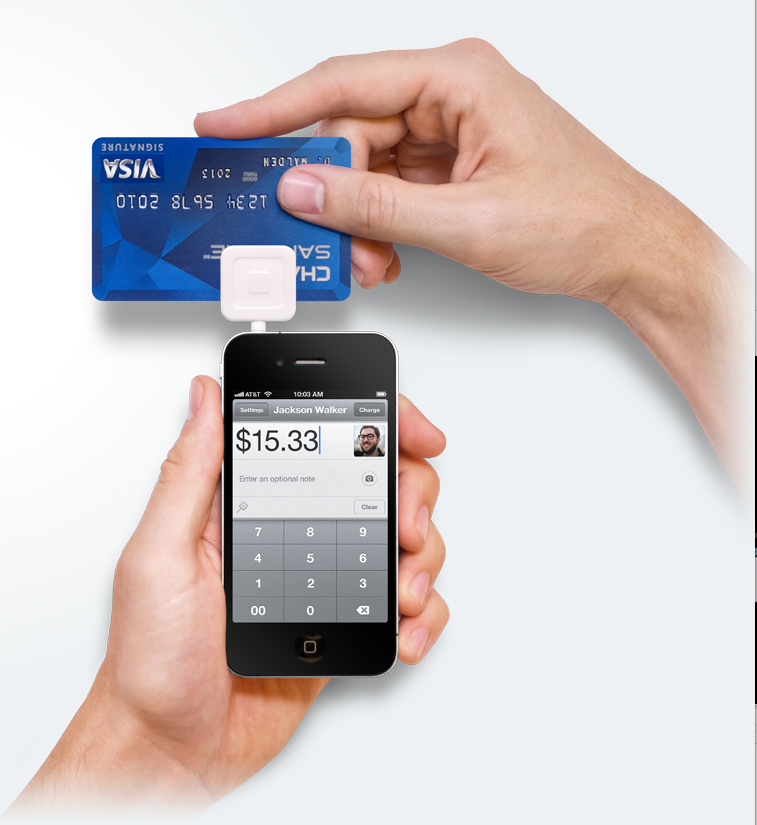
Square, the mobile payments system that uses a small (yes, square) attachment for an iPhone, iPad, or Android phone to swipe credit cards for payment, appears to be an ideal device and system for draining your open-loop cards.  There is no monthly or annual fee, and swipes cost a flat 2.75%.  Account signup and approval seems to be pretty streamlined and at the end of the day, the money is transferred to your bank account.

It seems to be the perfect way to get the last few $$$ from your open-loop gift card.  Or better yet, drain them when you get them so they won’t drain themselves with fees once you forget about them.

Better yet, get Square and become the open-loop hero by helping all your friends drain their gift cards.

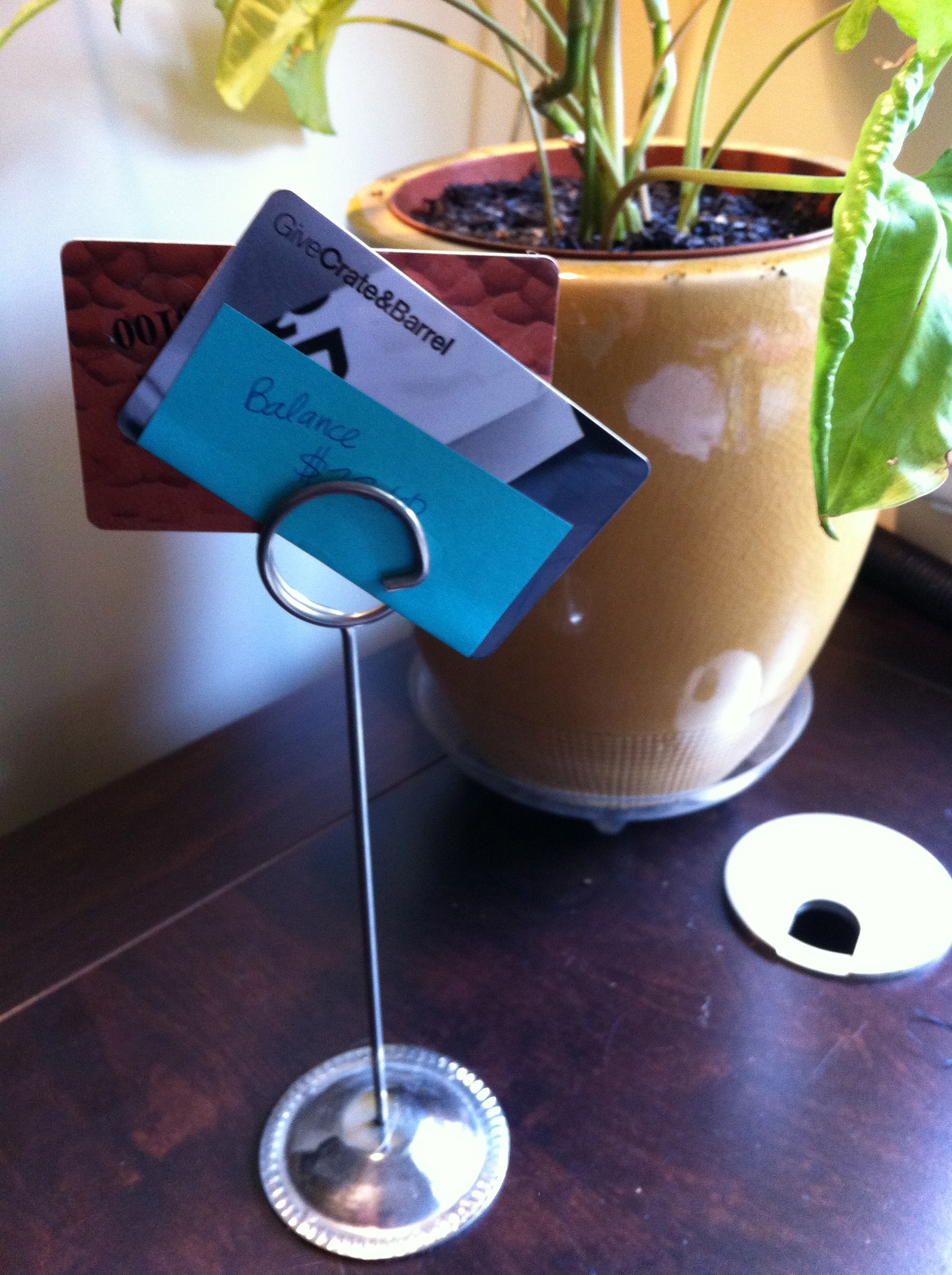
One of the keys to using up your gift cards is remembering to use them.  Some people keep them in their wallets so they have them whenever they are at the store the gift cards are drawn upon, but this method has largely been a failure for me as I can just as easily forget they are in my wallet as in a drawer.

My wife came up with a much smarter system; she puts them in a simple photograph stand (like this one) and places it somewhere that she’ll notice when leaving the house.

I’ve commented several times over the last year or more that what would be REALLY useful is a site that searches all the gift card secondary marketplaces for the best deal.

And finally today we have Cardnap, which does exactly that.  As the blog Lifehacker reports:

Cardnap’s primary function is to report on the best discounts, and the best selling prices, at gift card swapping spots like Plastic Jungle, Cardpool, and others. Type in a store name, browse through the discounted offerings, or hit the Sell section to see how much you can get for your remaining Cheesecake Factory balance. Free to use, the site claims no affiliation with any of the sites it scans, and there’s a handy balance checker you can use for any card.

John over at GiftCardBin sent us this report of a new scam:

I was contacted earlier today from a lady who wanted to sell us a gift card.  She was unfamiliar with the process but she had a Lowes gift card and was referred to the site by a friend.  I like to find out how they received the card and why they are selling it.  Her story:

She received a message from a “friend” in Ghana who needed help.  He was going to be sending her a gift card and asked that she cash that gift card in with any site that buys gift cards.  This is how she learned about us.  He was attacked in Ghana and needed money but was afraid to have anything sent directly to him.

She did not say if she was going to be sending him money back, keeping some of it, or sending it all back.  I don’t know if she even really knew the person but this sounded all too familiar to email scams I have received myself in the past.  Nonetheless, we declined to accept her cards.

I can only assume this is going to become a trend for some to scam not only consumers, but secondary gift card business’s.

A new service called GiftRocket is creating virtual gift cards that are tied to the recipient being in the vicinity of a specific location (based on a smartphones GPS reading) to redeem them.

GiftRocket, a Y Combinator-backed startup, is launching this week a service that marries the concept of virtual gift cards with location-based services.

Basically, GiftRocket lets you send money to a friend or relative in a snap, but also see to it that the transaction is effectively made only when the recipient ‘checks in’ to a certain location.

Hence, you could use GiftRocket to send $15 to a friend to sway him or her into checking out the breakfast offering at that coffee place you’ve been raving about, or you can gift your mother a $50 bouquet of flowers but only if she visits that new flower shop a couple of blocks away.

In my opinion, it is a toss up whether gift givers will actually want to make their friends or loved ones check in to a specific location to receive a virtual gift card or that recipients will bother.  But as one of GiftRockets founders points out:

There aren’t any new hoops to jump through. Just like you’d have to go to a store to spend a gift certificate, we want recipients to go to the business to spend their giftrocket.

And the recipient gets money transferred to their PayPal account, which is considerably easier to spend (and to spend all of it) than most gift card, especially open-loop ones.

Perhaps a service like GiftRocket will be a hit with parents, who can leave a trail of small gifts to get their children to visit all the right places each day or each week … like school, the library, or home.  Hmmm.

Contacting the consumer advocate at your local newspaper or TV station can be a great way to get a company that is shirking its legal, moral, or ethical obligations to pay attention and do the right thing.  So I pay attention to those consumer advocates with great interest to see what publicly shamed company is doing an about face this week.

And this week it appears that gift card issues have gained the ire of the San Jose Mercury News’ Action Line advocate Dennis Rockstroh and he reports being contacted by hundreds of people reporting that many retailers still refuse to give them cash for gift card balances under ten dollars, more than two years after the law compelling retailers to refund such balances too affect.

The reason this continues to happen is that most people don’t put up a fight, thinking it isn’t enough money to be worth it.  But it is, because it keeps happening over and over to tens or hundreds of thousands of people, adding up to millions of dollars.

If this happens to you, I urge you to report the retailer to the California Department of Consumer Affairs, the Better Business Bureau, your local consumer advocate, and anyone else you can think of.

I’m not the kind of person who throws all my change in a jar and then looks to cash it in every five years, but if you are, you’ve undoubtedly come across one of the 17,000 Coinstar automated coin counting machines where you can simply dump your coins in and get cash, at a cost – Coinstar takes a 9.8% commission of the total.

But they have been offering some deals where you can get a gift card instead of cash and certain retailers have signed up to sponsor the waiving of the Coinstar commission if you get a gift card instead of cash.

They also periodically offer discounted gift cards.  For instance, Apple has done several promotions where you can buy a $50 iTunes gift card for $40.

Not a bad way to save a bit of money.

Prepaid card issues have been pushing non-gift prepaid card since the Federal Reserve finalized gift card rules for the Credit Card Act of 2009 and this recent news blurb (Wall Street Journal Overheard, 3/8/11) perfectly demonstrates the fee traps that exist more than ever in non-gift prepaid cards.  As a reminder, the Credit Card Act of 2009 gift card rules exempt non-gift prepaid cards from the rules on disclosure and fee limits.

Price is everything for Wal-Mart Stores’ customers. So users of its popular prepaid debit card, managed by Green Dot, may be surprised to hear they still run up $3-a-month fees for up to two months even when their balance hits zero.

Many simply never use the card again. But those who do may find these fees and a regular $3 reloading fee deducted. For somebody depositing $100, that adds up to a painful 9% hit.

While monthly maintenance fees are disclosed by Green Dot, the cardholder agreement doesn’t specify that such fees can push account balances into the red. The only place to learn that level of detail is in Green Dot’s SEC filings, notes analyst Thomas McCrohan of Janney Capital Markets. Everybody knows the importance of reading the small print before signing up for a new financial product. But trawling through the 10-Q?

That’s a new low for both puntive fees and lack of disclosure for a prepaid card.

Secondary Marketplace Cardpool is now offering gift cards that can be used on their site, to purchase gift cards.

That is, two levels in indirection to a recipient actually getting a gift.

From a economical standpoint, this makes sense.

If you wanted to give your gift recipient as much choice in what gift they actually got, you could buy them an open-loop gift card, like American Express or Visa, but those come saddled with fees (yes, even after the new federal gift card laws) and are hard to spend the last few bucks.  Worse.

Or, you could give them a Cardpool gift card where they could buy a gift card from a retailer of their choice, at a discount, and likely be able to spend it all.  Better.

But as a gift, it is a horrible idea.  If a gift card tells a recipient that you weren’t willing to take the time to actually pick a gift for them, a gift card gift card (should I trademark that term?) says you weren’t even willing to take the time to pick a retailer they might like.

It’s a toss up.

I usually stick to actual gifts, unless it is a teenager that is in to music, an I get them an iTunes gift card.